
A floor needs to handle daily life without creating worry every time something spills. You want a surface that performs well in a busy kitchen, a basement that sometimes deals with humidity or a rental unit where durability and simplicity matter.
The aim here is simple: to give you a clear and straightforward view of three modern flooring families: vinyl, laminate and ceramic, so you can make an informed decision without unexpected issues or early renovations.
How to Compare Vinyl, Laminate and Ceramic Flooring?
What are the main advantages and limitations of each type?
Vinyl
Modern vinyl, especially SPC click flooring, is fully waterproof at the surface. It reacts very little to humidity or temperature changes, which is reassuring in basements, near patio doors and in rental properties. Vinyl flooring is easy to maintain, offers good acoustic comfort when it has an integrated pad and feels pleasant underfoot. Its limitation mainly lies in design realism, which can be less convincing than true ceramic or premium laminate.

Laminate
Laminate flooring is known for strong resistance to scratches and wear especially for homes with pets and children. Newer water-resistant collections greatly reduce the risk of swelling after everyday spills. However, indoor humidity still needs to be controlled, and the floor must not be blocked with very heavy fixed furniture.
Ceramic
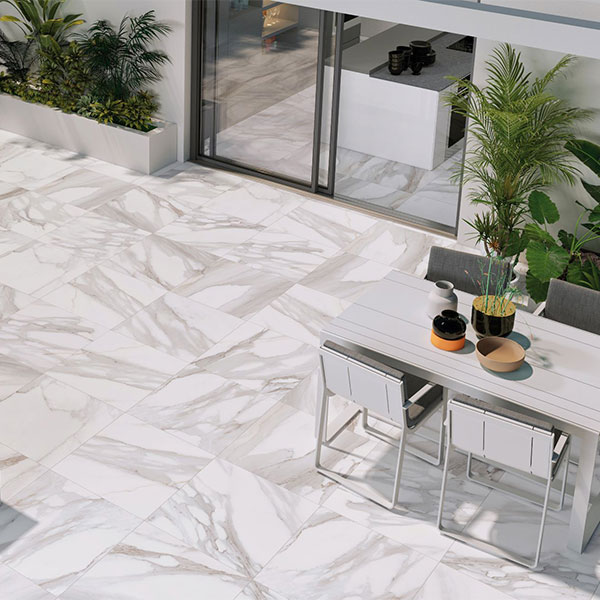
Ceramic tile belongs to a category of its own when it comes to durability. It shows almost no wear, is fully resistant to water and comes in a wide range of styles and formats. On the other hand, it requires a more technical installation, a stronger subfloor, a higher overall budget and offers a firmer feel underfoot.
When Are Vinyl, Laminate or Ceramic the Most Appropriate?
For rental buildings or multi-unit properties, click or glued-down vinyl is often the preferred choice. It handles moisture well and is easier to replace after water damage, especially when glued down or loose-laid.
In a condo subject to higher soundproofing requirements, click vinyl with an integrated pad or laminate installed over a good acoustic membrane helps meet sound requirements between floors.
In a house, the decision depends on the room and your lifestyle.
- Vinyl is a strong option for active zones like the kitchen, entryway or basement thanks to its water resistance and simple maintenance.
- Laminate is well suited for living rooms or bedrooms when you want a wood look and strong scratch resistance, especially with children or pets.
- Ceramic is often chosen for bathrooms, busy entryways and high-end kitchens where long-term durability and stability are priorities.
Ceramic is also the go-to option for areas where you want a floor that lasts for many years, such as:
- The main bathroom
- A large tiled shower
- A heavily used entryway
A kitchen built for durability
What Should You Consider First: Appearance, Performance or Budget?
Focusing only on cost or only on appearance often results in disappointment.
The right choice comes from this combination:
- A look that suits your décor and the room’s lighting
- Performance suited to risks such as water, rough debris and traffic
- A level of maintenance you are ready to handle
A well-chosen mid-range vinyl often lasts longer than a high-end product used in the wrong context.
Which Flooring Should You Choose Based on the Room and Your Home’s Conditions?
Kitchen, Bathroom and Areas with Frequent Water
Managing water and splashes is the priority.
- Fully waterproof click or glued-down vinyl for peace of mind
- Water-resistant laminate for those who want a wood look without stress
- Ceramic for the wettest areas or near showers, tubs and sinks
Comfort also plays a role. Ceramic feels firm and cool unless paired with radiant heating. Vinyl offers more cushioning, and laminate with a good underlayment remains comfortable while keeping a wood appearance. Surface texture also influences slip resistance, especially in bathrooms.
Basements, Entryways and Areas Exposed to Humidity or Grit and Dirt
Basements experience wider humidity variations. A good glued-down or loose-laid vinyl is easier to remove, allows the subfloor to dry and can be reinstalled if needed.
Entryways collect sand, gravel and salt. A highly scratch-resistant laminate or a well-chosen ceramic tile performs better, particularly with proper floor mats.
Useful differences to remember:
- Click vinyl: floating installation; requires a very flat subfloor
- Glued-down or loose-laid vinyl: more flexible; ideal for basements or heavy-use areas
- Ceramic: needs a rigid structure and sometimes a decoupling membrane
Open Areas, Living Rooms, Condos and Multi-Unit Buildings
In open layouts and condos, acoustics are a major consideration. Vinyl with an attached pad and laminate on a quality membrane help reduce noise from footsteps.
For pet owners or landlords, scratch resistance is important.
- Quality laminate generally resists scratches better than vinyl
- Ceramic is unaffected by claws or heels, but reflects more sound if no acoustic measures are added
How to Choose a Durable, Low-Maintenance Floor?
Before purchasing, take the time to evaluate:
- Total budget versus expected lifespan
- Water and humidity risks in each room
- Temperature variations (patio doors, solariums, basements)
- Underfoot comfort and acoustic needs
- Whether you plan to install it yourself or hire a professional
A handy owner can install click vinyl or laminate in a simple room. Ceramic usually requires more experience, tools and careful structural preparation.
Common Mistakes to Avoid
- Choosing a product only because it’s discounted without assessing real-world use
- Ignoring the subfloor, especially for click vinyl and ceramic
- Installing laminate where humidity is never controlled
- Using too much water or harsh cleaning products
Many problems come from poor surface preparation, unmanaged humidity or installation that does not follow basic guidelines.
How to Keep Your Floor Looking Good Over Time?
Keeping indoor humidity stable, using pH-neutral cleaners, limiting water when cleaning and placing good carpet can significantly extend a floor’s lifespan. For ceramic, checking grout periodically helps maintain appearance. A well-chosen, well-installed and well-maintained floor can stay attractive for many years.
Summary
Vinyl, laminate and ceramic each offer clear strengths when used in the right context. Vinyl provides reassurance around water, laminate brings strong scratch resistance and a wood look, and ceramic offers long-term durability with wide design flexibility.
By taking your rooms, habits and maintenance preferences into account, you set the foundation for a floor that will support your home, condo or rental unit for years without unwanted surprises.